
Ecological crisis: Unprecedented Algal Bloom Continues to Sweep South Australia
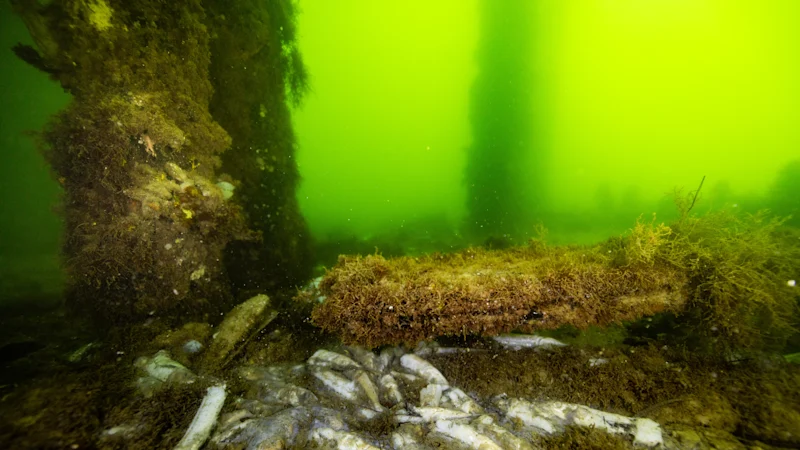
Garfish lie rotting along the South Australian coast due to the algal bloom, which has turned waters green. Source: Stefan Andrews, courtesy Great Southern Reef Foundation
South Australia has been experiencing an unprecedented harmful algal bloom (HAB), primarily made up of a tiny-but-toxic type of microalgae called Karenia mikimotoi, since March. It now covers 4,500 sq kms – an area twice the size of the ACT – and is unlikely to go away anytime soon.
Our friends at Surfers for Climate have released a new short film, Sea Sick, talking to those living on the front “shorelines” of this crisis and demanding an update to disaster criteria, a natural disaster declaration, federal support for long-term ocean health, and clear communication for coastal communities.
But before we jump into that, here’s everything you need to know about the bloom, which we last covered in our newsletter back in May.
Impacts
Environmental impact: In what can only be described as an ecological disaster, recent records indicate that at least 14,500 animals across more than 450 species have been killed so far, along with damage to plant life and habitats covering the entire food web. And those are only the recorded mortalities.
Economic impact: The algal bloom has caused huge complications for the state’s marine tourism industry, its nearly $500 million fisheries industry, and local businesses operating in or near the ocean – from surf schools to bait & tackle shops.
Social impact: Coastal communities have been greatly affected. Beaches are littered with dead marine life, and the toxic algae poses a health risk to beachgoers, surfers, and swimmers, leading to flu-like symptoms, respiratory issues, and skin & eye irritation.
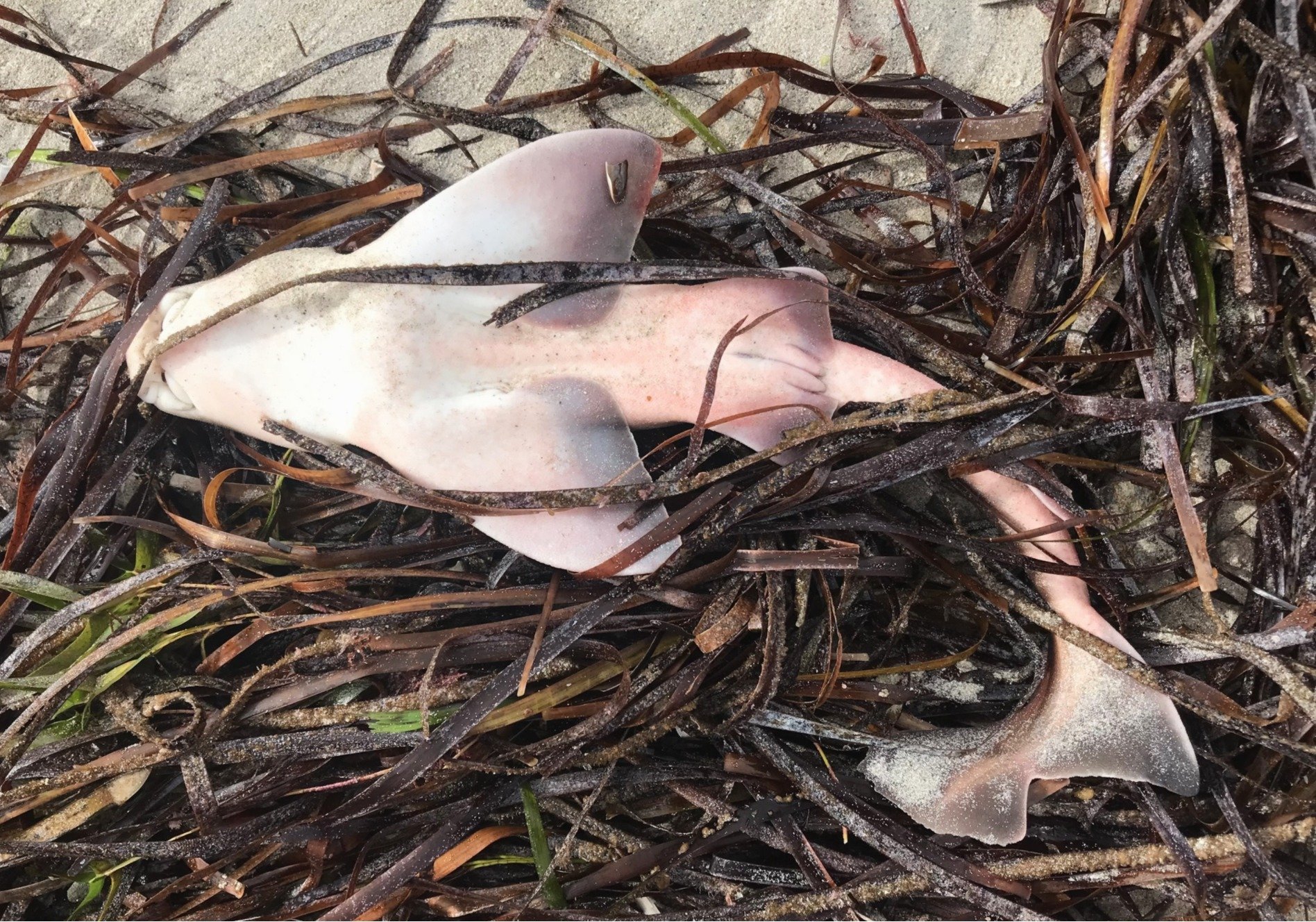
Port Jackson Shark found washed ashore during the bloom event. Credit: Lochie Cameron
What caused it?
Algal blooms, whether harmful or not, are naturally occurring events. However, certain conditions can kick them off and make them more intense, widespread, and longer-lasting. Karenia mikimotoi is part of the natural food web, but in high abundance becomes hugely problematic.
Experts say the outbreak followed three key events:
In 2022/23, flooding along the River Murray saw nutrient run-off enter the Southern Ocean
Then in 2023/24, unprecedented cold upwelling brought nutrient-rich water to the surface.
Finally, in September 2024, a marine heatwave began, which saw ocean temperatures 2.5ºc above normal levels. This, in addition to higher-than-average air temperatures and consistently calm seas and low winds, created the perfect conditions for a bloom.

Before & after video of the bloom at Edithburgh jetty. Credit: Great Southern Reef Foundation
Why is it happening?
SA Environment Minister Susan Close told the ABC that all three of these events could be attributed to climate change.
Authorities and scientists say climate change has been a key driver of extreme weather events and marine heatwaves across the country. It was hoped that winter winds and swells would “disperse and nullify” the algae bloom in South Australia, but this hasn’t happened. Our friends at the Great Southern Reef Foundation wrote to the federal government in 2023, warning of the likely impact of marine heatwaves. They wrote again in May this year, calling for a conservative 10-year $40 million investment in a national monitoring program (the same as what we have for the Great Barrier Reef) but didn’t hear back.
What next?
There are calls for this climate-driven marine event to be declared a national disaster, which would trigger special federal assistance measures to support individuals, businesses, and communities in their recovery. But under the existing (and outdated) federal natural disaster framework, neither marine ecosystem collapse nor harmful algal blooms meet the relevant definition.
As Dr Lucille Chapuis from La Trobe University told Australian Science Media Centre,
““the current algal bloom affecting South Australia is not just an environmental event: it is an ecological disaster on par with bushfires and floods, and it should be formally recognised as such.””
And whilst announcements on 21 and 22 July 2025 of $14 million each in assistance packages from the federal and South Australian governments have been welcomed, experts warn that more is needed and stress that sustained action is essential.

Marine scientists have released a seven-point action plan to tackle this large-scale algal bloom, emphasising urgent, strategic responses to protect marine biodiversity and communities.
They’re calling on Australian federal and state governments to commit to these seven actions to respond to this event and be prepared for more in future:
Investigate and fast-track emergency interventions for species at risk
Immediately invest a minimum of $10 million to start research to understand the impact of this bloom to inform plans for what to do when the next bloom hits
Accelerate Australia’s decarbonisation efforts and become a global leader in climate action to help minimising ocean warming
Reduce nutrient and dissolved carbon pollution
Restore and protect marine ecosystems that naturally draw down nutrients and support biodiversity to help it bounce back after blooms.
Establish a long-term monitoring program for the Great Southern Reef, modelled on the $40 million, 10−year Great Barrier Reef’s Reef Integrated Monitoring and Reporting Program (RIMReP)
Establish mechanisms to plan for and respond to catastrophic natural disasters
Is Australia serious about its climate commitments?
The Commonwealth Government has selected Adelaide as its preference to host COP31 next year, should Australia’s national bid to co-host the annual climate change summit in partnership with the Pacific be successful.
But the bloom and subsequent mass marine deaths in the region underscore an urgent need for Australia to commit to strong emission reduction targets to protect the ocean and broader environment, as well as the way of life and livelihoods of both Australian communities and our Pacific neighbours.
Take Action:
Sea Sick: Click to watch film
Our mates at Surfers for Climate are calling on the Federal Government to:
Update disaster criteria so climate-driven marine events can trigger natural disaster funding.
Declare a natural disaster right now.
Commit Federal support for long-term ocean health.
Set a strong 2035 climate target.